
Most freelance cash-flow problems are not caused by bad clients. They are caused by small, avoidable invoicing habits. Here are the mistakes we see most often, and the simple fix for each.
1. Invoicing late
The longer you wait, the longer you wait to be paid. The due date starts the day you send the invoice, not the day you finished the work. Fix: invoice the day the work is delivered, or set a recurring reminder for the same day every week.
2. No payment terms
If you do not state when payment is due, the client decides for you. Fix: put a clear due date on every invoice and the terms on every quote.
3. Vague line items
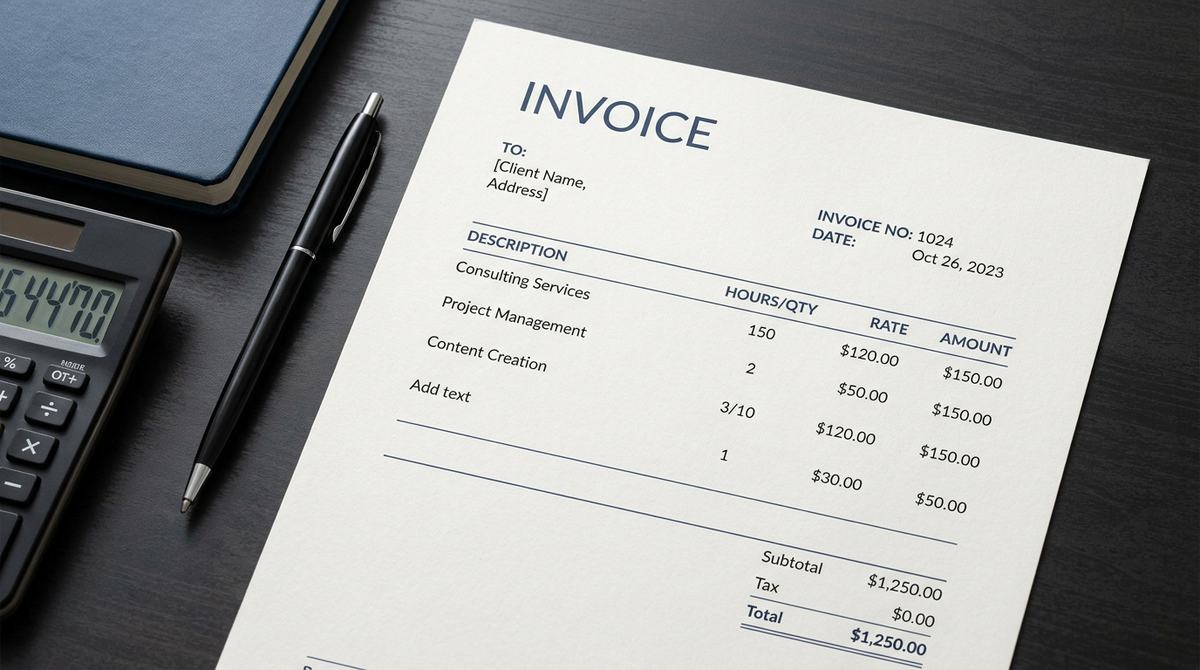
"Services rendered" invites questions. Fix: describe each deliverable. "Logo design, 3 concepts and 2 revisions" is specific enough that nobody needs to ask.
4. Sending to the wrong person
An invoice that lands in a general inbox can sit for weeks. Fix: ask who handles payments and send it to them directly, with the client contact copied in.
5. Missing payment details
If the client has to email you to ask where to send money, you have added a delay. Fix: include bank details or a payment link on the page itself.
6. Mismatched numbers
An invoice total that differs from the quote causes friction. Fix: reuse the quote's items, and explain any change in a note.
7. Duplicate or missing invoice numbers
This confuses clients and accountants alike. Fix: use a simple, increasing sequence and never reuse a number. See our guide to numbering invoices.
8. Forgetting tax details
Where tax or VAT applies, leaving it off can cause trouble later. Fix: show tax as its own line, and keep your registration number on the page if you have one.
9. Not following up
Silence is not a payment plan. Fix: chase on a schedule, politely: the day after, a week later, then a firm final notice. Our guide to chasing a late payment has messages you can copy.
10. Starting without a deposit
Doing the whole job before any money arrives puts all the risk on you. Fix: ask for a deposit from new clients, and use milestone payments on bigger jobs.
11. Losing track of part payments
Clients often pay in pieces. If you do not record each one, you will not know what is still owed. Fix: record every payment as it arrives and check the remaining balance.
12. Not keeping copies
You will need your invoices at tax time, and sometimes years later. Fix: keep every invoice and quote in one organised place.
A 60-second checklist before you send
- Client name and contact are right.
- Invoice number is new.
- Items are specific.
- Totals add up.
- Due date is a real date.
- Payment details are on the page.
Make it a system, not a chore
Good habits beat good intentions. When invoicing is quick, you do it right away. That is the idea behind FreelanceDesk: clients, orders, invoices and payments in one place, with what you are owed always visible.
Want to try a cleaner invoice right now? The free invoice generator on this site makes a PDF in a couple of minutes.
Make your next one in minutes.
Create a free invoice or quotation in your browser, or get the FreelanceDesk app to handle clients, payments and income.